The story behind a Korean meal
Get curious about the rice, soup and banchan on a Korean table. Choose an ingredient and discover its place in everyday culture.
See how it worksKOREA · EVERYDAY CULTURE
A new taste, a wish for the journey, a quiet moment between sights. Turn the everyday side of Korea into a story you can take home.
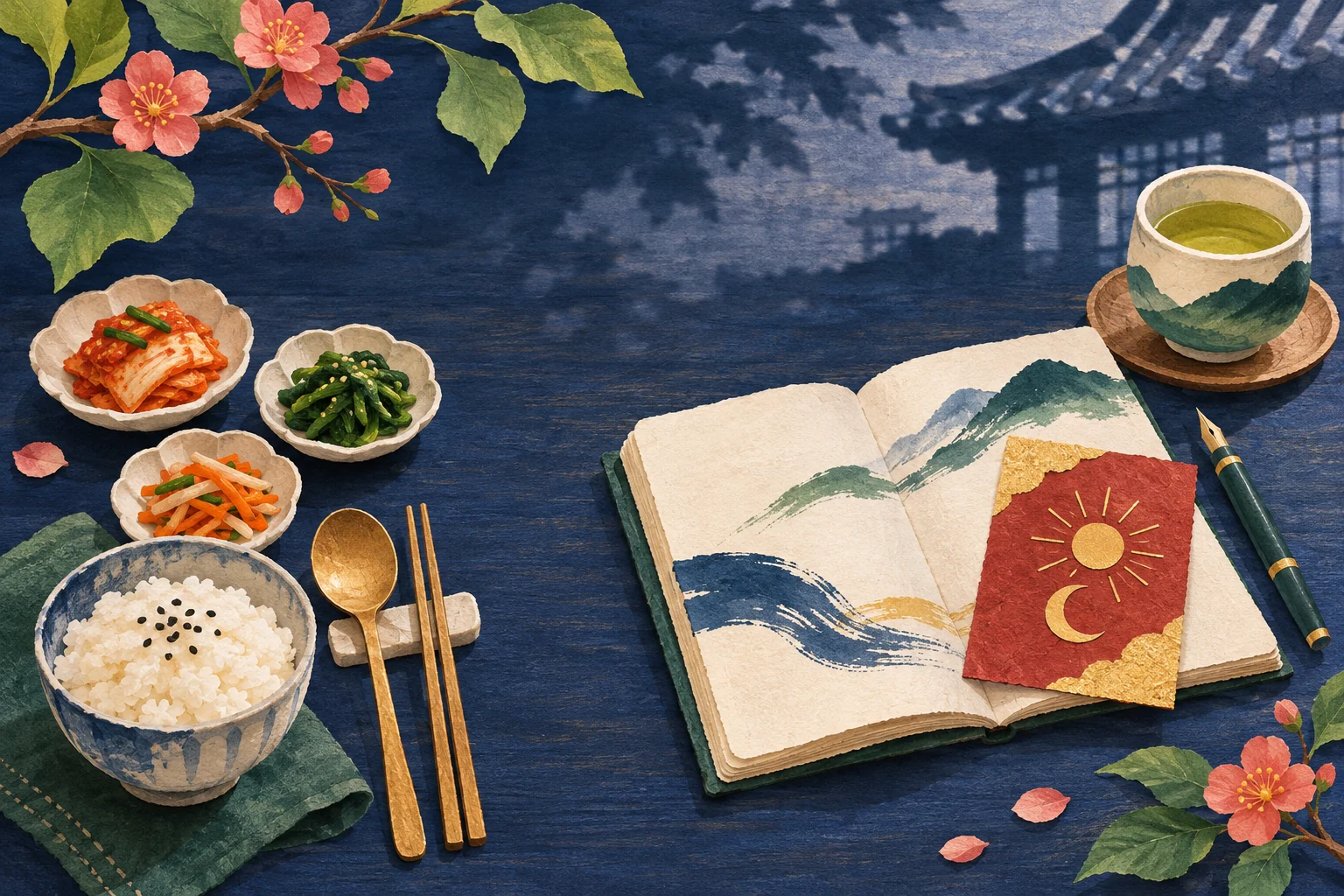
Three ways to explore the everyday culture around you and turn it into your own story.
Get curious about the rice, soup and banchan on a Korean table. Choose an ingredient and discover its place in everyday culture.
See how it worksDiscover bujeok, a Korean folk talisman tradition, and explore colours and shapes for a wish you want to remember.
See how it worksRemember a meal, a walk or a restful moment. Keep one small idea you would like to carry into everyday life after your trip.
See how it worksChoose a theme and add a sentence. Get a simple experience sequence and a memory you can save, for free.
Your note is not sent or automatically saved.
Example: My first bean sprout soup in Jeonju. I want to remember the warm broth and the morning streets.
Check the language and requested information on the connected service screen.
Example: A safe journey and kind encounters. A blue moon and a small path become the shapes of my wish.
Check the language and requested information on the connected service screen.
Example: After walking around Gyeongbokgung, I stopped for tea. Tomorrow I want to leave some breathing room between plans.
Donguibogam is a historical work inscribed on UNESCO’s Memory of the World Register in 2009. Here it is a starting point for exploring food, seasons and everyday culture. The article also introduces “My Double” in the context of lifestyle reflection. Historical ideas do not establish modern medical benefits or an individual diagnosis. Talisman imagery is an optional creative encounter with folk symbols; religious participation and predictions are not required.
This is a self-guided digital culture guide and memory-card tool. It does not book classes or tours. For a visit or class, check dates, languages, availability and fees with the official operator.
A dish name cannot confirm its ingredients. Ask the restaurant about broth, sauces, fermented seafood, allergens and shared equipment. This page does not certify vegetarian, halal or allergy-safe food. The local food guide can help you prepare questions.
This guide introduces the Korean folk tradition of bujeok. It does not describe it as the same object as a Japanese omamori. Exploring the symbols and expressing a personal wish is optional; no effect is guaranteed.
The tool records a travel memory about food, walking or rest. It does not measure the body, diagnose illness or ageing, or prescribe food or medicine. Discuss medical needs and dietary restrictions with a qualified professional.
Creating and downloading a text memory card on this page is free. Check connected services for generation, printing or product costs. Making a card does not automatically earn internal iMo rewards or travel expenses.
This guide does not ask for birth or medical details. Your choices and note are not sent or automatically saved; they stay in the current tab. Keep the downloaded file yourself. A linked service such as Wolha has its own input and usage policies.